
The Common Green Darner is one of the most common and most recognized dragonflies in North America. They are one of a few species of dragonfly in North America that migrates. They are one of the earliest species of dragonflies spotted in the north each year with first sighting in April or earlier


Click on photos above for a close-up view.


Click on photos above for a close-up view.
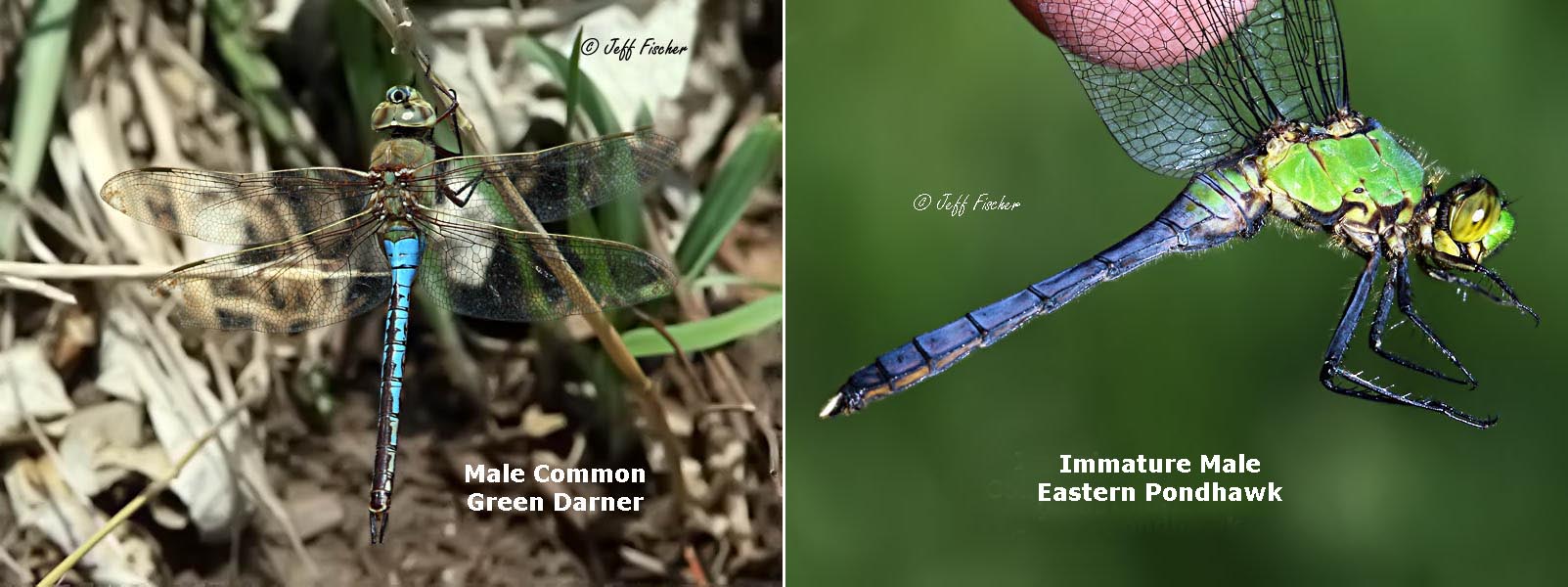
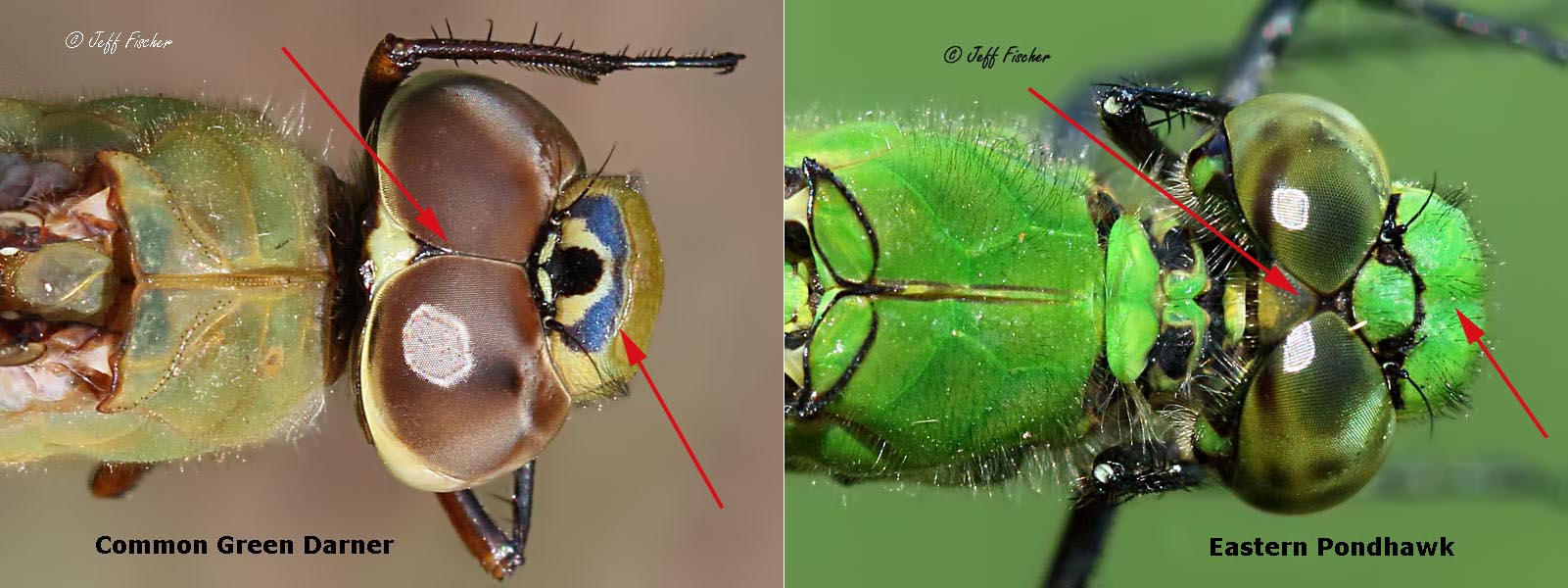
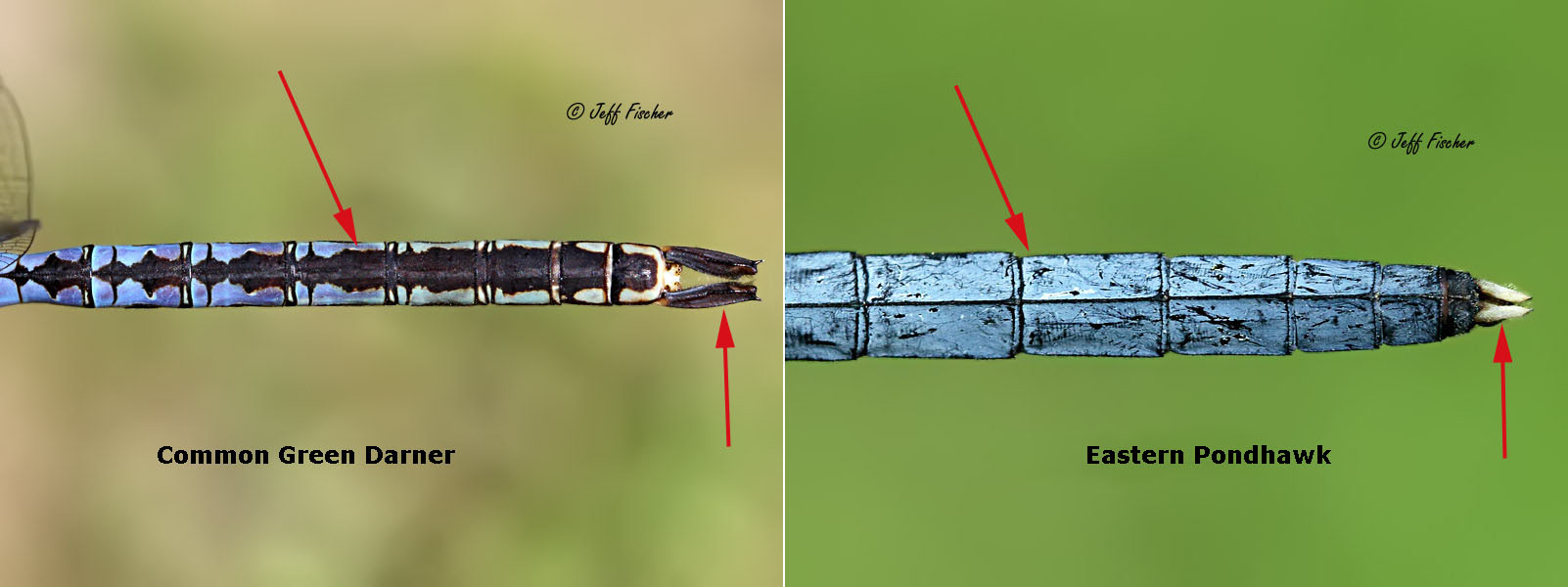
Immature male Eastern Pondhawk: Because there are no other similar looking Darners in Minnesota, the Common Green Darner is pretty easy to identify here. The only other dragonfly that might be confused with the Common Green Darner is the immature male Eastern Pondhawk. Male Eastern Pondhawks are green when they emerge and as they mature they turn blue with pruinosity, beginning at the back of the abdomen and then moving forward. At a certain point during this process it is possible for the Pondhawk to have a green head and thorax and a blue abdomen, just like a male Common Green Darner. That is where the similarity ends. The Green Darner, averaging around 3 inches is about twice as large as the Pondhawk, which averages around 1.6 inches. The Green Darner also has much larger eyes that come together over a larger plane than the Pondhawk's. Green Darners often have some markings on the top of the abdomen with long, dark terminal appendages. The Eastern Pondhawk has no markings on its abdomen and has much smaller terminal appendages with white cerci
One of the few species in North America that migrate south. Many emerge in late summer and begin to migrate south in large groups. When they arrive at their southern destination they mate and lay eggs. Their offspring grow as nymphs and when they emerge they fly north, arriving and laying eggs before most other species emerge. The offspring of these darners start the process over again. Common Green Darners that do not emerge in time to migrate will mate and lay eggs in their northern territory. Their offspring will over winter as nymphs similar to other species of dragonflies that do not migrate.
Still waters such as lakes, ponds, marshes and slow moving streams
Pairs lay eggs in water logged wood or aquatic vegetation while in tandem


Click on the icons above for this species' range maps
Click here for county and state checklists from Odonata Central.
Range maps and checklists courtesy of Odonata Central. Copyright © 2016 OdonataCentral. All Rights Reserved. Abbott, J.C. 2006-2018. OdonataCentral: An online resource for the distribution and identification of Odonata. Available at www.odonatacentral.org.

Note: Migratory green darners can be seen as early as March in Minnesota depending on the weather.
